GH Threw It Back With a Very Classic TV Hospital Move
GH Threw It Back With a Very Classic TV Hospital Move
A classic medical drama beat happened when Lucas shocked Delilah with large handheld paddles during a tense operating room crisis.
On General Hospital, Chase and Brook Lynn had no idea what they were about to encounter when they went for a walk. Instead of going to dinner, they came across a pregnant woman who had collapsed. They got her to wake up, found out her name was Delilah, and took her immediately to GH.
There, the woman went into premature labor, and things got hairier as an emergency C-Section was performed.
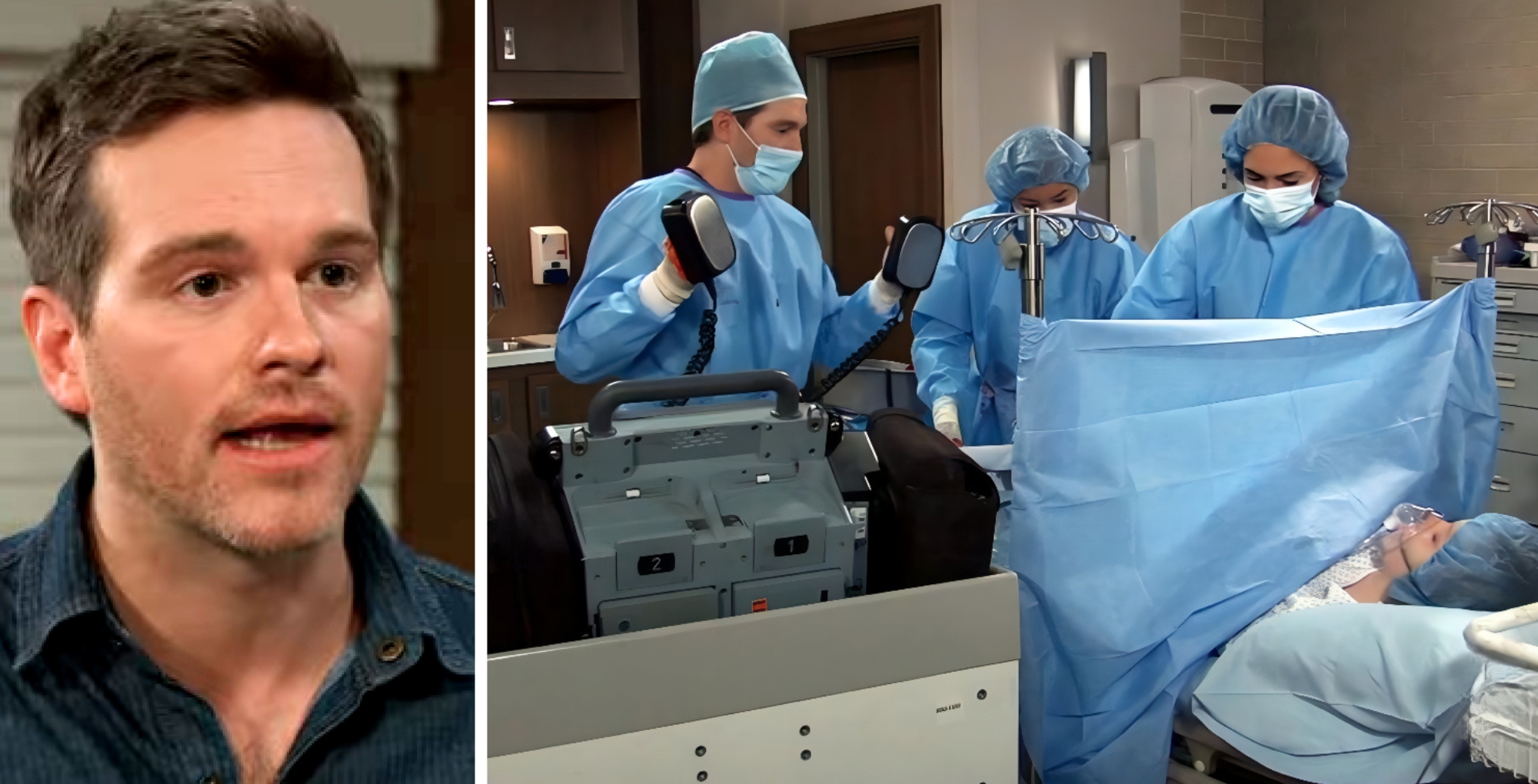 Image Credit: CBS A high-stakes emergency on General Hospital turned into a nostalgic TV throwback when Lucas used old-school defibrillator paddles to try to save Delilah.
A Very Familiar TV Hospital Moment
It’s been quite some time since we’ve been inside the operating room on GH while an active surgery was performed.
The scenes were shot well, with exciting camera angles and a rising sense of tension. The baby was extracted and taken to the NICU, but Delilah’s condition worsened. Suddenly, Lucas (Van Hansis) ordered Elizabeth (Rebecca Herbst) to wheel over the huge defibrillator.




He grabbed the paddles, yelled, “Clear!” and tried to save the young woman’s life to no avail. If that moment felt oddly familiar, it probably should have.
Those handheld paddles have been a staple of TV hospital scenes for decades. They’re the visual shorthand every medical drama learned to use. The doctor yells ‘clear,’ the paddles press to the chest, and the body jolts upward for dramatic effect.
The only problem is that real hospitals moved on from that setup years ago. Modern defibrillators rarely involve doctors grabbing loose paddles and charging them like something from a 1980s emergency room scene.
Today, most cardiac emergencies rely on adhesive defibrillator pads that stick directly to the patient’s chest and connect to a monitor that analyzes the rhythm and delivers shocks automatically. (Could Delilah’s tattoo signal that Dawn of Day is back?)
How Hospitals Actually Do It Now
In a real trauma unit, the process usually looks far less theatrical. Medical teams attach large adhesive pads to the patient’s chest and side, and the machine handles much of the analysis.
The system checks the heart rhythm and determines whether a shock is appropriate, reducing the guesswork and speeding up treatment.
Those systems also allow continuous monitoring. The patient remains connected to the machine while doctors and nurses administer medications and oxygen and provide other interventions. Instead of dramatic paddle charges, the equipment simply monitors the heart and delivers a shock if the rhythm warrants it.
None of that looks quite as exciting on camera, though. A pair of pads stuck to the chest does not have the same visual punch as a doctor grabbing paddles and shouting “Clear!”
Television has relied on that imagery for generations because viewers instantly recognize it. So during that scene, it felt like a dramatic throwback, and quite frankly, it was truly exciting, tapping into a piece of classic TV medical drama history.