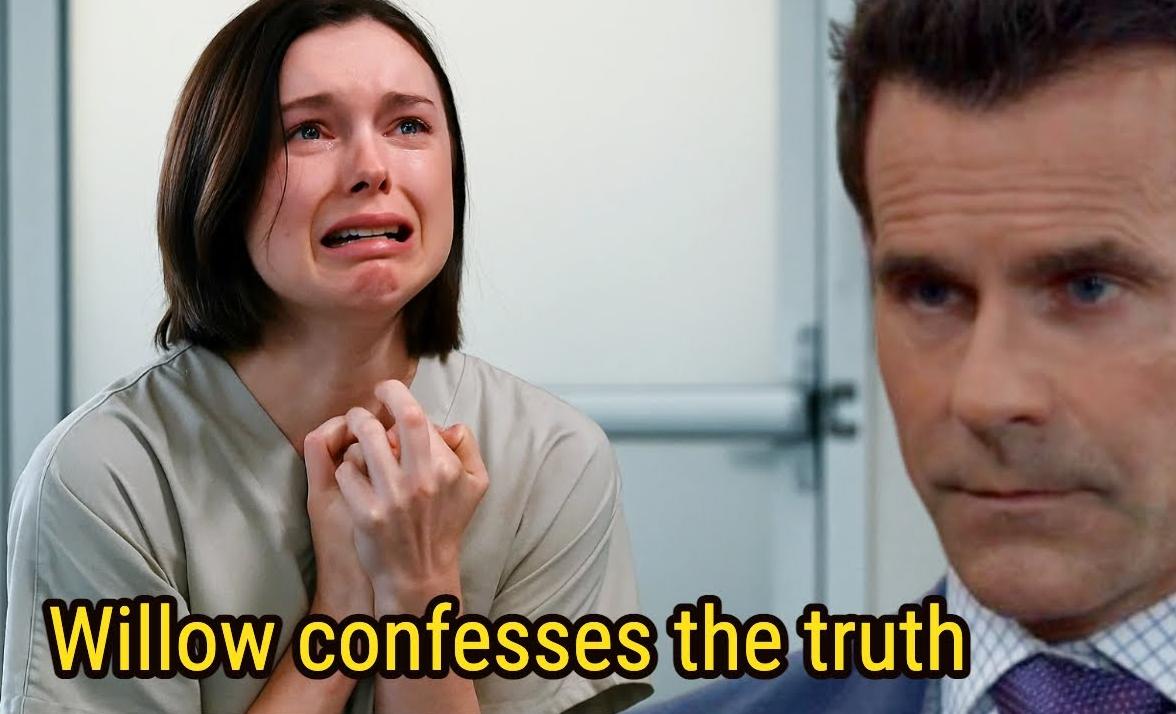
Willow confesses the truth when Drew proposed, Willow covered up who sʜᴏᴛ Drew!
General Hospital Spoilers: Drew’s Proposal Turns Nightmarish — Willow Confesses, Faces Psychiatric Care, and a New Obsession Is Born
What was meant to be a healing gesture explodes into a psychological thriller in Port Charles.
Drew chooses the very spot where he was shot to propose to Willow — hoping to reclaim the past and script a brighter future. Instead, the pavement remembers. The air thickens. And the ghosts he tried to conquer come roaring back.
At first, it looks like romance under streetlights: a ring, a vow, a promise to fight for Wyatt and Amelia together.
But as Drew kneels, Willow’s pulse skids. Fractured images rip through her: the iron weight of a gun, the crack of a shot, the metallic echo of breath. It isn’t nostalgia — it’s a warning. Something buried is clawing free.



Drew senses the shift. The hero who stared down bullets now feels a colder fear — not of danger in the alley, but in Willow’s eyes. Her hands tremble, her gaze slips, and the night he survived begins replaying in jagged frames. This isn’t nerves. This is memory.
Then it happens. Willow’s defenses shatter and the truth detonates: she was the one who shot Drew. The confession isn’t coy or confused; it’s raw, undeniable, and devastating.
And beneath the Willow Drew loves is a second presence — a darker self born from grief, custody loss, and relentless pressure — the same persona that stalked Daisy and ran Sasha out of town with ice-cold precision.
Drew staggers under the weight of it. He wants to say trauma lies, but her details don’t. The recoil. The gunpowder. The voice inside her whispering, “Do it before he leaves you too.” For Willow, the revelation splits her in two. One self begs for help; the other watches — calculating, emotionless, unbothered by the wreckage.
Within hours, the only humane choice is made. Willow is escorted to psychiatric care — not as punishment, but protection. Staff speak carefully of fragmentation, integration, and trauma-induced identity division. On good days, Willow recognizes Drew and weeps, asking to be kept away so she can’t harm anyone. On terrifying days, a stillness settles over her: the persona that pulled the trigger peering out through her eyes, learning the room, mapping exits.
For Drew, visiting becomes a ritual of heartbreak. Sometimes she knows him. Sometimes she recoils. Sometimes that colder presence stares back, and he feels the bullet all over again.
The doctors chart incremental progress, but his nights are longer, louder. What if the shot had landed an inch differently? What if the darkness takes the wheel again after discharge? He’s not scared of Willow — he’s terrified of losing her to the shadow that lives inside her.
This is the cruelest twist: love is still there, fierce and aching, but now it shares space with vigilance. Drew’s new obsession isn’t revenge or control — it’s survival. Can he stand watch at the edge of her mind and help her pull the pieces together without becoming collateral in another blackout? Can he love both the caregiver and the stranger who nearly killed him?
Port Charles, meanwhile, can’t look away. A proposal becomes a crime scene redux; a ring becomes a mirror. Friends whisper about accountability and illness, law and mercy. The question isn’t simply “What did Willow do?” — it’s “Who is Willow when the darkness knocks?”
As the week closes, expect quiet, surgical fallout. Legal threads tighten. Family lines blur. And Drew faces an impossible calculus: stay close enough to anchor Willow without triggering the persona that views him as a threat.
If integration succeeds, there’s a path back — halting, imperfect, real. If it fails, the woman he loves may not die… but she could disappear.
One thing is certain: the shooting was never just a case file. It was the fuse. And with Willow’s confession lighting the powder, Port Charles enters a new phase — one where hearts, minds, and identities are the battlefield.