Willow Finally Finds Out Who Shot Drew — Willow has been proven innocent!
For weeks, something about Willow Tate’s story has felt unsettling. Emotional scenes have lingered longer than usual, dialogue has taken on a heavier tone, and moments that should feel routine have carried the weight of quiet goodbyes no one was ready to name.
That unease only deepened as Willow finally learned the truth about who shot Drew Cain. With that truth came long-awaited vindication, but also heartbreak and a reckoning that sent shockwaves through every corner of Port Charles.
Suspicion had clung to Willow like a shadow she couldn’t escape. Whispers followed her through hospital corridors, sideways glances lingered at the Metro Court, and even those who loved her struggled to fully silence their doubts.
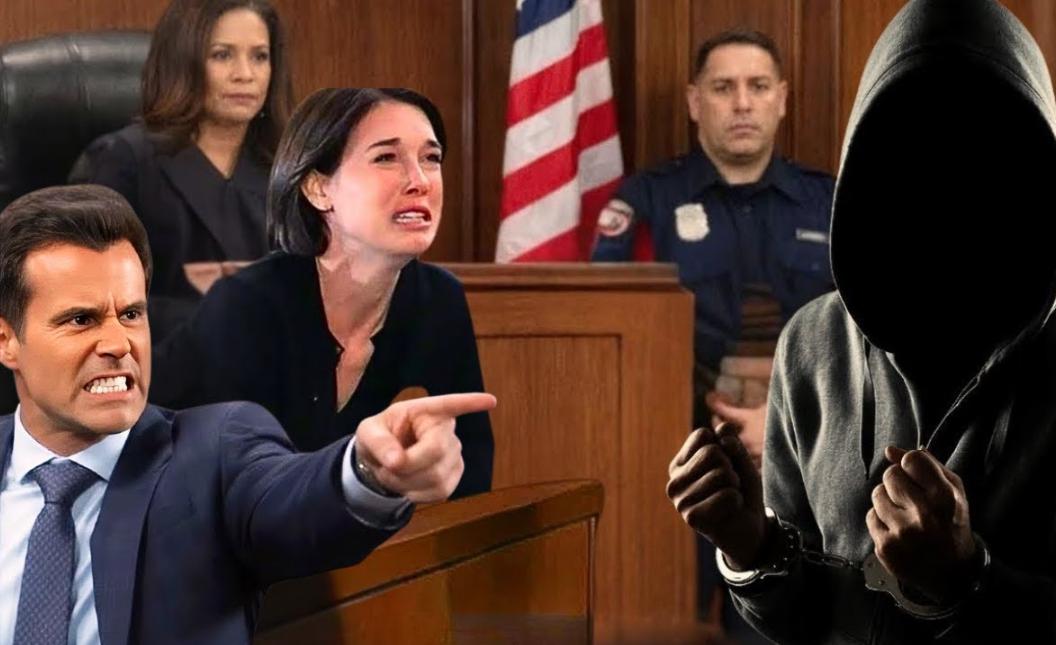
When the truth finally detonated in open court and the real shooter was exposed, Willow’s innocence wasn’t merely proven. It became undeniable, irreversible, and devastating in its consequences.



The revelation did more than clear her name. It forced Port Charles to confront how quickly it had turned on one of its own, how fragile trust can be, and how easily lies can destroy lives long before the truth has a chance to breathe.
From the very beginning, the narrative had been cruelly stacked against Willow. Circumstantial evidence, misleading testimony, and a carefully constructed web of half-truths painted her as the most convenient suspect in Drew Cain’s shooting.

Her proximity to Drew that night raised eyebrows, and her complicated emotional history with Michael, Nina, and the Quartermaine family gave skeptics all the fuel they needed to believe the worst. Already exhausted by months of illness, turmoil, and fractured relationships, Willow found herself fighting not just for her freedom, but for her identity.
She wasn’t simply defending herself against a criminal accusation. She was fighting a narrative that threatened to redefine who she was in the eyes of her family, her children, and the town she had worked so hard to belong to.
What made the ordeal especially painful was the isolation. Even as Willow maintained her composure, the cracks beneath the surface were impossible to miss.
Every interrogation chipped away at her resolve, and every whispered rumor reopened wounds she thought had healed. Michael stood by her publicly, yet doubt crept into even his strongest reassurances, an unspoken fear that there might be something he didn’t know.
Nina, desperate to protect her daughter but haunted by her own past manipulations, swung between fierce defense and paralyzing guilt. She knew better than anyone how lies and secrets have a way of circling back with devastating force.
Through it all, Willow’s greatest fear was never prison. It was losing the moral ground she had fought her entire life to earn.
The turning point came not quietly, but with the kind of courtroom bombshell General Hospital executes best. As testimony unfolded and timelines were scrutinized, small inconsistencies began to surface, details that no longer fit, evidence once dismissed suddenly demanding attention.
The tension in the courtroom was suffocating as the truth edged closer to daylight. Willow sat frozen, hands trembling, torn between hope and dread after living so long with the possibility of exoneration that trusting it felt almost impossible.
When the real shooter was finally named, the truth tore through the courtroom like a shockwave. Gasps echoed, faces drained of color, and Willow felt the ground shift beneath her feet as the impossible became reality.
She hadn’t done it. She never had.
In seconds, every accusation collapsed and every silent condemnation disintegrated under the weight of the truth. Willow wasn’t just cleared of a crime; she was returned to herself.
But vindication, as Port Charles so often proves, is never simple. Relief collided with rage, gratitude tangled with grief, and the realization set in that while her innocence was proven, the damage had already been done.
Relationships had been strained to the breaking point, trust tested and in some cases shattered. Knowing someone else committed such a violent act and allowed Willow to take the fall introduced a new layer of horror that could not be undone.
As the courtroom emptied, Willow was left to process the emotional aftermath. Tears came not from weakness, but release, mourning the nights spent questioning her worth and fearing how her children might one day remember this moment.
Michael’s reaction was immediate and raw, his relief inseparable from guilt. He had stood by her, yet fear had existed, and Willow saw it, understood it, and still chose grace, even knowing the road back to complete trust would not be easy.
Nina’s response was layered with her own history, relief colliding with fury and regret. Watching her daughter nearly destroyed forced her to confront the ways her past had made Willow vulnerable to suspicion in the first place.
The fallout rippled far beyond Willow’s inner circle. Drew Cain’s shooting, once clouded by misdirection, took on new meaning as betrayals surfaced and uncomfortable questions emerged about who in Port Charles had known more than they admitted.
For Drew, the truth brought its own reckoning. Knowing Willow had suffered because of a crime committed against him added another layer of guilt, hardening his resolve to see real justice served.
What makes this storyline resonate so powerfully isn’t just the mystery of the shooter. It’s the emotional truth at its core.
Willow’s journey reflects a universal fear, the terror of being misunderstood and judged by perception rather than truth. Vindication may have arrived, but it came after damage that cannot be erased.
In the aftermath, Willow emerged changed, not hardened, but sharpened. She faced the worst, survived it, and came out with her integrity intact.
That kind of resilience doesn’t fade. It transforms.