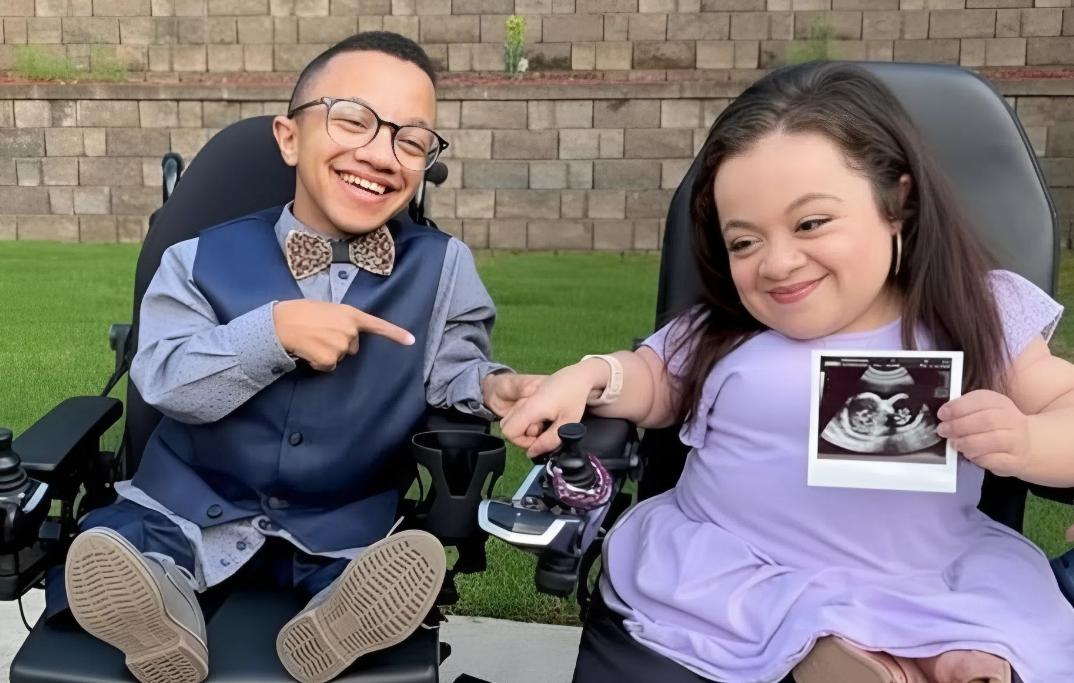
What a surprise! | Jay Pamela revealed she’s pregnant today 😚! Jay is so happy!
“Jay and Pamela”: TLC’s New Reality Series Sparks Conversation About Disability, Representation, and the Myth of the “Good Disabled Person”
When TLC launched its newest reality series Jay and Pamela in early March, the network framed it as a warm, uplifting celebration of love, resilience, and visibility. The show follows Jay Manuel, a Black trans man, and his fiancée Pamela Chavis, a Mexican American woman—both living with osteogenesis imperfecta (OI), commonly known as brittle bone disease.
Their charisma, humor, and optimism immediately distinguished them from typical portrayals of disability on television. But for many viewers living with OI themselves, the series also reopened deeper questions about who gets to be seen—and how.
OI is rarely depicted accurately in pop culture. Movies like Unbreakable reduce the condition to a metaphor for fragility, while many reality series lean heavily on stereotypes. What makes Jay and Pamela feel fresh is its refusal to portray the couple as victims.
Instead, TLC spotlights their love story, their jokes, their sexuality, and their ambitions. Jay, a music producer, and Pamela, who works in corporate America, move through life with a confidence that feels both empowering and groundbreaking.




Yet within disability communities, the show has sparked debate about the longstanding trope of the “good disabled person.” On reality TV, disabled individuals are frequently portrayed as endlessly upbeat—grateful, adaptable, and non-confrontational.
Discrimination, when shown, becomes a teachable moment rather than a lived struggle. In Jay and Pamela, moments of public staring or rude curiosity are brushed off with warmth rather than confrontation. The couple’s positive outlook feels genuine, but it also serves the comfort of an able-bodied audience eager for inspiration rather than uncomfortable truths.
That tension becomes more visible when the show avoids the harsher realities many disabled Americans face. Nearly one in four working-age disabled adults lives below the poverty line. Millions rely on Medicaid, SSI, or SSDI, programs that limit savings and can be jeopardized by marriage.
These economic constraints shape everything from housing to healthcare access. Yet on the series, financial challenges virtually disappear. Jay lives with his parents in a comfortable Georgia home, supported by generational stability.
The couple tours potential houses, drives a fully accessible van, and plans a wedding without discussing systemic barriers that make such goals unreachable for many viewers with OI.
TLC has long showcased contrasting models of disability—most notably My 600-lb Life, where subjects are often portrayed as passive, dependent, and framed through narratives of personal failure.
Against this backdrop, Jay and Pamela offers a visually “acceptable” disability: independent, hard-working, and self-sustaining. For audiences unfamiliar with disability politics, the show risks reinforcing the misconception that those who require government support simply aren’t trying hard enough.
But Jay and Pamela also succeeds in areas where mainstream TV has historically failed. The series highlights the love between a Black trans man and a Mexican woman, weaving in a rare depiction of a supportive Black family embracing their transgender child.
Jay and Pamela openly discuss adult relationships, sexuality, and autonomy—topics often denied to disabled people onscreen. Their authenticity is real, not performed.
As the season unfolds, the show becomes a reminder of why representation matters—and why it must move beyond feel-good narratives.
Jay and Pamela’s story is powerful and necessary, but it also underscores the responsibility of reality TV to portray disability not just as inspirational content, but as a complex experience shaped equally by joy, identity, and systemic barriers.
In the end, Jay and Pamela challenges viewers to look deeper—not just at the couple on screen, but at the assumptions the audience carries with them. Because if reality TV doesn’t tell the full story, those living it must.