Julie Chrisley Reveals Shocking Health Struggle: How Prison Left Her With a Serious Lung Condition.
Julie Chrisley, star of Chrisley Knows Best, has long been admired for her poise, charm, and resilience, but behind the smiles and reality TV drama lies a story of endurance few fans could have imagined. In a candid revelation, Julie has opened up about a serious health struggle she developed during her time in prison—a lung condition that continues to affect her daily life and serves as a stark reminder of the unseen physical toll of incarceration.

For many, Julie’s prison sentence was already a dramatic chapter filled with public scrutiny, legal battles, and emotional strain. Yet, while the world focused on courtroom drama and media coverage, Julie faced a far more insidious challenge: her own body betraying her. According to Julie, the first signs of trouble were subtle, almost easy to dismiss.
Daily routines, once effortless, began to feel taxing. She noticed herself becoming short of breath more easily, experiencing occasional chest tightness and coughing fits that, at first, she attributed to stress or sleepless nights. But unlike the emotional toll, which friends and family could support her through, the emerging physical condition offered little in terms of understanding or care.
Inside the prison facility, medical attention was reportedly limited, and minor complaints were often dismissed. Julie describes an environment plagued by mold, dust, and poor ventilation—conditions she believes directly contributed to the deterioration of her lung health. “We constantly complained about the air quality,” she explained in a recent interview, “but nothing ever changed.


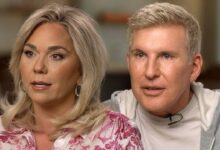

You learn to ignore it, or it just becomes part of the background of your day… until you can’t anymore.” For someone who had always prioritized health and wellness, the sudden, unexplained decline was both frightening and disorienting. The very air she breathed, Julie said, became a source of fear rather than sustenance.
As time passed, her symptoms intensified. Simple tasks like climbing stairs, walking short distances, or even performing routine household chores became exhausting. She experienced moments of panic when it felt as though she could not take a full breath, a sensation compounded by the emotional strain of imprisonment. The combination of physical vulnerability and emotional stress created a uniquely challenging situation for Julie—one in which she felt entirely on her own.
Upon her release, medical professionals confirmed the severity of her condition: she had developed a lung disorder that required ongoing monitoring and management. While Julie has not disclosed the exact diagnosis, she revealed that flare-ups remain a reality of her day-to-day life. Activities many take for granted—exercise, walking, or even climbing stairs—can trigger breathing difficulties. “It’s a constant reminder that what you go through inside those walls doesn’t just stay there,” she said. “Freedom isn’t just about walking out; it’s about living with the consequences you didn’t see coming.”

The emotional impact of the diagnosis has been profound. Julie admits that being unable to trust her own body, coupled with fears of permanent damage, made reintegration into normal life even more daunting than anticipated.
“There’s a vulnerability that comes from realizing your body isn’t the ally you thought it was,” she explained. “After everything you’ve endured emotionally, to then face a challenge like this physically—it shakes you.” For Julie, the combination of physical struggle and public scrutiny created a unique burden. Not only did she have to adjust to life outside prison, but she also had to navigate the constant lens of media and fan attention, making every health-related setback feel magnified.
Despite these challenges, Julie has taken a proactive approach to her recovery and management. She has embraced a slower, more intentional lifestyle, emphasizing rest, clean air, and a supportive home environment. Her focus on wellness extends beyond physical health; she prioritizes mental clarity, emotional support from her family, and the creation of a safe, nurturing space for herself and her loved ones. The shift is a testament to her resilience—a conscious decision to reclaim control in a life that was, for too long, dictated by external forces.