GET OUT OF HERE – Victor finds the evidence and kicks Nikki out of the Newman mansion YR Spoilers
On The Young and the Restless, the mystery surrounding the missing USB becomes the spark that ignites a far more devastating emotional explosion. In Genoa City, it’s never the object itself that causes the damage—it’s what people believe that object proves. And this time, belief becomes a weapon.
As tensions between Victor Newman and Nikki Newman spiral to a breaking point, Nikki’s long-suppressed anger finally erupts. Years of compromise, loyalty, and silent endurance fall away as she confronts Victor’s escalating cruelty—his habit of wielding power as punishment and destroying lives in the name of control.

Pushed beyond her limits, Nikki does the unthinkable. She threatens divorce—not as a tactic, but because she believes Victor has crossed a line that cannot be uncrossed.
The threat hits Victor like a detonation. He has always treated marriage as a fortress, and Nikki’s willingness to walk away feels less like rejection and more like treason. What Victor doesn’t realize is that this fracture in his marriage reopens an old wound for Phyllis Summers—one that never truly healed.




Phyllis remembers exactly how Victor once betrayed her in a ruthless business deal, smiling as he stripped her of power and left her humiliated and expendable. That betrayal didn’t fade with time—it calcified. Watching Nikki finally challenge Victor awakens something dark and deliberate in Phyllis. She doesn’t just want revenge. She wants symmetry.
If Victor believes power is the only language that matters, Phyllis intends to speak it fluently.
Her plan unfolds with chilling precision. Knowing Victor’s psychology inside and out—his paranoia, his obsession with loyalty, his tendency to trust evidence that confirms his worst fears—Phyllis manufactures a trail designed to point in only one direction. Carefully planted emails that almost sound right.
Financial moves that seem just plausible enough. Timing too perfect to ignore. The false narrative suggests Nikki stole the USB and secretly aligned with Jack Abbott—not out of desperation, but calculation.
Phyllis knows Victor doesn’t verify when he feels wounded. He reacts. And that reaction is exactly what she needs.
When Victor discovers the fabricated “proof,” the devastation is deeply personal. This isn’t a corporate loss or a strategic setback—it’s betrayal at the core. In his mind, Nikki’s earlier threat of divorce transforms into evidence of a calculated escape plan. His pain sharpens into rage, fueled by humiliation and certainty.
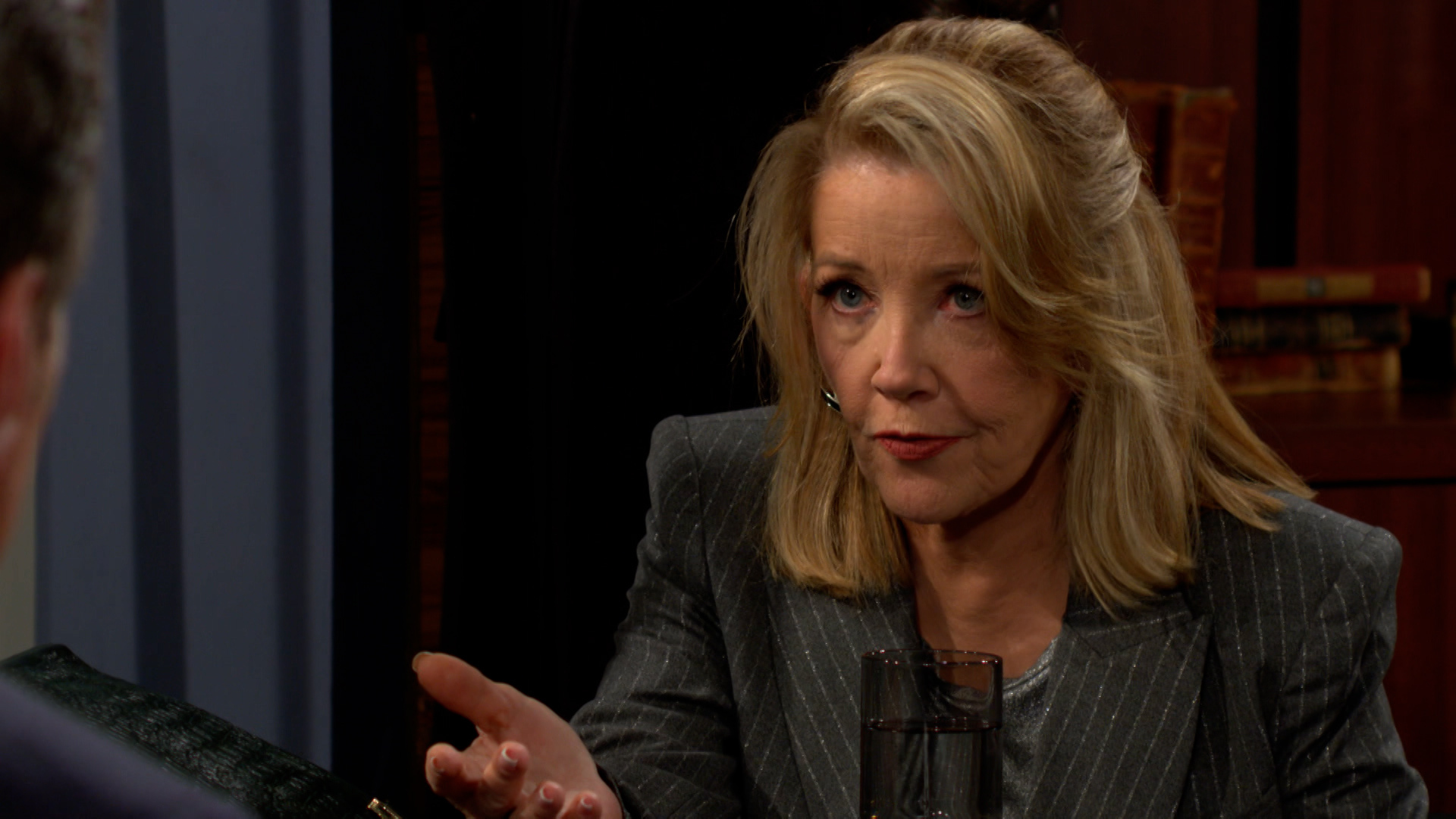
Victor confronts Nikki not to ask questions, but to pass judgment. With icy finality, he declares the marriage over, refusing explanations or defenses. The verdict, in his mind, has already been reached.
The fallout is swift and brutal. Nikki is expelled from the Newman ranch as if she were an intruder, not the woman who shared Victor’s life, wars, and secrets for decades. He cuts off all contact, orders her erased from his world, and turns their shared home—once a symbol of survival—into the stage for total erasure. Nikki leaves behind not just her marriage, but an identity intertwined with Victor’s power for most of her adult life.
And Victor isn’t finished.
True to Newman form, he vows absolute retribution. He intends to destroy Nikki’s reputation, dismantle her financial security, and rewrite her public image until nothing remains. Mercy, to Victor, would look like weakness. What he cannot see—blinded by his certainty—is that the evidence driving his fury is a lie, and his greatest vulnerability isn’t the USB or Jack Abbott. It’s his refusal to question the story he most wants to believe.
As the dust settles, the true danger of Phyllis’s plan becomes clear. She hasn’t just attacked Victor’s empire—she has detonated his marriage, his emotional anchor. Nikki, stripped of protection and cast out, becomes collateral damage in a war she never chose. And haunting it all, the missing USB remains unfound, quietly mocking the chaos it caused.
Because in Genoa City, the most destructive lies aren’t shouted—they’re the ones that fit perfectly into existing fears. And once they take root, the truth often arrives too late.
In the aftermath, Nikki turns to Jack Abbott—not out of recklessness, but necessity. When a life built over decades is ripped apart by someone else’s certainty, survival demands clarity. She tells Jack she wants to beat Victor. The words sound strong, almost clean. But beneath them lies grief. Anger may armor her, but it doesn’t erase heartbreak.

Nikki is exhausted—not just by Victor, but by the relentless tension within the Newman family. Wanting peace isn’t weakness. Wanting things to feel good again isn’t shameful. But hope is fragile when it must coexist with Victor Newman’s power.
She and Victor shared a lifetime—survival, forgiveness, relapse, rescue, betrayal, recovery, devotion—until love and habit blurred into identity. Now that it’s shattered so violently, Nikki can’t help but wonder whether victory over Victor would bring freedom… or simply another kind of emptiness.
Jack sees the truth in her eyes: the humiliation of being cast out, the disbelief of realizing the man who once swore he couldn’t live without you can erase you overnight when pride is wounded. Nikki admits what she hates admitting—part of her still mourns Victor. Still remembers the man he once was before his strength became suffocation.
Even as she asks Jack for help, Nikki fights herself—fights the urge to excuse Victor, to believe she can still save him, to fear that destroying him will also destroy the last illusion that their love was permanent.
Meanwhile, Victor seals the ranch behind her departure like a man closing a wound he refuses to examine. He tells himself it was necessary. That authority must be defended. But when the house grows quiet, the truth seeps in. He isn’t triumphant. He’s exhausted. Bruised by a pain money can’t fix—the absence of the woman who anchored his life.
Victor will never say it aloud, but the silence will haunt him. He’ll replay Nikki’s face, her heartbreak, the moment he knew she believed him. Regret will hover dangerously close—but he will bury it beneath fury. Because regret requires uncertainty, and uncertainty is the one thing Victor Newman cannot tolerate.
This is what makes the moment so devastatingly human.
Nikki joining Jack doesn’t mean she’s stopped loving Victor. It means loving him has become unbearable when it demands humiliation. Victor shutting her out doesn’t mean he feels nothing—it means his fear of losing control outweighs his ability to hold on gently.
They are both suffering. Both exhausted. And neither is certain what happiness even looks like anymore—because happiness once meant surviving together. Now survival may require separation.
And that kind of survival still tastes like grief.